Breed
At Debucher Clipperdown, breed health is our number one concern, and it always has been. Please read below to see the breed specific illnesses of Dachshunds and BGVs, and what is being done to help.
IVDD
Intervertebral Disc Disease refers to a common spinal condition in Dachshunds (due to their long spines) where the cushioning discs between the vertebrae of the spine bulge or rupture. This can lead to pain, paralysis, and nerve damage.
Type 1: More common in younger dachshunds. Involves the disc nucleus extruding into the spinal canal, leading to acute pain or possible paralysis.
Type 2: Generally seen in older dogs, where the disc degenerates over time, leading to chronic pain or the gradual onset of neurological conditions.
Symptoms: back pain or sensitivity to tough along the spine, reluctance to move, jump, or engage in normal activities. Hunched back, crying in pain, loss of bladder or bowel control, weakness or paralysis in the hind limbs.
Unfortunately, all Dachshunds are susceptible to IVDD more than other breeds, but there is evidence to suggest that it affects different breeds of Dachshunds more than others. Studies have found the following:
- Miniature Smooth-Haired Dachshunds - 29.9%
- Smooth-Haired Dachshunds - 16.8%
- Miniature Wire-Haired Dachshunds - 16.5%
- Miniature Long-Haired Dachshunds - 15.7%
- Long-Haired Dachshunds - 9.4%
- Wire-Haired Dachshunds - 8.6%
Often, surgery is suggested by vets, and this can cost upwards of £7000. However, it has now been found that conservative treatment can actually have a higher chance of success than surgery. This includes 12 weeks of strict crate rest and restricted movement, combined with pain medication and anti-inflammatories.
There are some preventative measures that can be taken, despite the exact causes of IVDD being unknown. This includes weight management, controlled exercise without over exertion and avoiding activities such as jumping from heights, using ramps or specially made steps in your home, genetic screening and regular vet checks.
Clipperdown Dachshunds has created an IVDD information pack, and also offers advice to anyone wishing to know more, both of which can be requested here:
Lafora Epilepsy
Approximately 5-10% of Miniature Wire Haired Dachshunds are susceptible to Lafora- a genetic and degenerative form of epilepsy. It is an inherited form of myoclonic epilepsy resulting in a mutation of the EPM2B (NHLRC1) gene. This condition leads to the accumulation of abnormal glycogen (Lafora bodies) in the brain and other tissues, causing neurological symptoms. Symptoms typically begin to manifest between 5 to 7 years of age and include myoclonic seizures, often triggered by sounds, movements or flashing lights. As the disease develops, affected dogs may also develop ataxia (loss of muscle control), dementia and blindness.
The inheritance pattern of Lafora is autosomal recessive, meaning both parents must carry the mutated gene for offspring to be affected. Dogs with one copy of the mutation are “carriers” and do not show symptoms, but can pass the gene onto their puppies.
Genetic testing is available and it is vital that prospective puppy owners ensure their breeder of choice is aware of this condition and has tested their breeding dogs.
Sadly, treatment options are limited, focusing mainly on managing symptoms with epilepsy drugs- but there is no cure. The prognosis for affected dogs is poor, with life expectancy from the first symptoms being between 6 months to 2 years, with symptoms progressing and often causing a massive loss in quality of life before death.
We are delighted to say that our Miniature Wire line is clear of Lafora and PRA cord1 following DNA testing

Clipperdown Sweet Nugget
PRA CORD1

Clipperdown Coco Bean
Progressive Retinal Atrophy is a group of genetic diseases that lead to the degeneration of the retina, causing progressive vision loss and eventual blindness. One specific form of PRA in Dachshunds, known as cord1, affects the miniature varieties. Standards of any coat type do not carry this disease.
The onset of symptoms can vary widely, with some dogs showing signs as early as 6 months, although the average is around 5 years old. Symptoms include difficulty seeing in daylight first, progressing to night blindness, and then eventually total blindness. There is no cure.
Since 2005, a DNA test has been available, and all responsible breeders will have tested their lines to ensure none of their dogs are carriers or affected. It is important that all prospective puppy owners discuss this with breeders before choosing them.
POAG
POAG (Primary Open-Angle Glaucoma) is an inherited eye disease that is very common in Petit Basset Griffon Vendéens (PBGVs). It happens when the fluid inside the eye can’t drain properly, so the pressure slowly goes up. This high pressure damages the optic nerve and retina, and the lens can also slip out of place. Without treatment, most affected dogs go blind, but it usually happens gradually between 3 and 8 years of age. At first the dog often seems painless, which makes it easy to miss until it’s quite advanced.POAG is caused by a single faulty gene (ADAMTS17). The disease only appears if a puppy gets the bad gene from both parents. A quick cheek-swab DNA test can now show three results:
Clear (no bad gene)
Carrier (one bad gene – stays healthy but can pass it on)
Affected (two bad genes – will get POAG)
Thanks to the test, responsible breeders can avoid producing affected puppies while keeping the gene pool large and healthy.
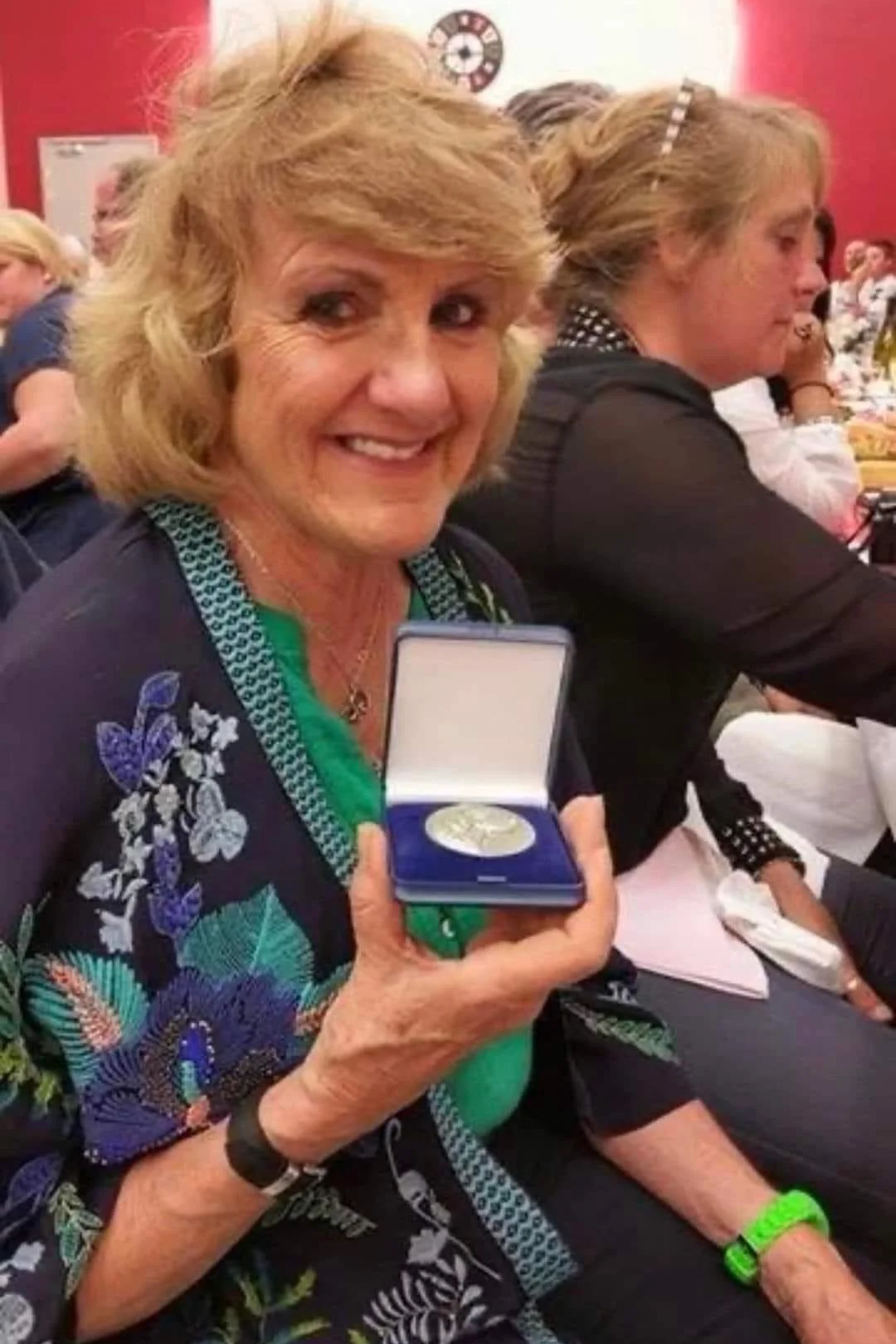
In 2015, Viv was awarded the Medal d’Honneur by the Club du Griffon Vendeen in recognition of her work with Dr Peter Bedford and Dr Cathryn Mellersh in finding a genetic test for POAG.
OTHER HEALTH ISSUES
-
Ear infections are one of the most common health problems in all basset-type breeds, including the Grand Basset Griffon Vendéen (GBGV), Petit Basset Griffon Vendéen (PBGV), Basset Hound, and Basset Fauve de Bretagne. The reason is simple: they have long, heavy, pendulous ears that hang down and cover the ear canal. This creates a warm, dark, moist environment where bacteria and yeast love to grow, and very little air circulates to dry the ears out. Among all the possible germs that cause ear infections in these breeds, Pseudomonas aeruginosa is the real troublemaker. It is a tough, resistant bacterium that often shows up once an ear has already been infected a few times or has been treated incorrectly. Pseudomonas loves wet ears and is very common in GBGVs and other drop-eared hounds.
Why Pseudomonas is such a problem in basset breeds:
It forms a slimy layer (biofilm) inside the ear canal that protects it from many normal ear drops.
It quickly becomes resistant to many common antibiotics.
Infected ears usually smell very bad (often described as rotten or sweet-sickly), produce lots of brown-green-yellow gunk, and are extremely painful – the dog shakes its head, scratches, and cries when the ear is touched.
The ear canal can swell shut and even rupture if it gets bad enough.
How owners and vets handle it in GBGVs and other bassets:
Prevention is best Clean and thoroughly dry the ears once a week (or after every swim or bath).
Use a good veterinary ear cleaner that dries the canal (many contain alcohol or drying agents).
Pluck excessive hair from inside the ear canal if the groomer or vet recommends it – hair traps moisture.
Early treatment
If the ear is only a little red and waxy, a normal cleaning + mild cleaner with antibiotic/anti-yeast/steroid drops usually fixes it fast.
When Pseudomonas is involved:
The vet has to take a swab, look under the microscope, and often send a sample for culture because Pseudomonas needs special, strong antibiotics.
Sometimes injectable antibiotics are used if the infection is very severe
Drops have to be used for 2–4 weeks (not just 7–10 days like normal infections).
Because the ears are so floppy, many GBGV owners learn to clean deeply and put medication in twice a day for weeks at a time. Some dogs end up with recurring Pseudomonas every few months and need long-term weekly cleaning or special medicated flushes for the rest of their lives.
In short: long basset ears + moisture = perfect home for Pseudomonas. The key is keeping the ears clean and very dry, catching infections early, and never stopping treatment too soon when Pseudomonas is the culprit. Most GBGV owners say that once you get on top of the ears, the dog is fine – but if you ignore them, the infections come back again and again and can be very hard (and expensive) to cure.
-
Some Dachshunds come in “dilute” colors like blue (diluted black), isabella/fawn (diluted chocolate), or lilac (diluted blue + chocolate). These colors are caused by a gene called the dilution gene (d/d). When a dog has two copies of this gene (double dilute or “d/d”), it lightens the coat and nose color, but it also often causes skin and hair problems. This condition is called Color Dilution Alopecia (CDA) or Color Mutant Alopecia.
Common problems in dilute Dachshunds:
Hair thins or falls out, especially on the back, ears, tail, and sides (looks “moth-eaten”)
Dry, flaky, scaly skin (like bad dandruff)
Repeated skin infections or acne because hair follicles get clogged or damaged
Itchy skin and sometimes blackheads
The problems usually start between 6 months and 3 years of age and get worse over time
Not every dilute dog gets bad CDA – some only have mild thinning – but many blue and especially isabella/lilac Dachshunds end up with big bald patches.
Seasonal Flank Alopecia (Seasonal Baldness on the Sides)
This is a different problem that can happen in Dachshunds (dilute or not).
Every winter (or sometimes spring), the dog loses hair on both sides of the body in perfect oval or round patches. The skin in those spots turns dark (hyperpigmentation). The hair usually grows back in summer.
It’s not dangerous, just looks strange. It is more common in some bloodlines and can happen alongside CDA.Chocolate Dachshunds and Coats
Whilst being a recognised, and normally healthy, colour, Chocolate (brown) Dachshunds often have softer, thinner, or slightly woolly coats even without the dilute gene. When you combine chocolate with another chocolate, or with the dilute gene (making isabella/lilac), the coat quality is usually the worst. These dogs almost always develop moderate to severe Color Dilution Alopecia and very sparse hair.
Why You Should NEVER Breed Double Dapple, Double Dilute, or Unrecognized/Exotic Colors
Double Dapple (two copies of the merle gene)
Very high risk of deaf and/or blind puppies (missing eyes or tiny eyes). Many are born completely white with serious health problems.Double Dilute (d/d)
High chance of lifelong skin disease, infections, itching, and baldness. The dog suffers and needs extra vet care and special shampoos for life.Unrecognized or “exotic” colors (like extreme dilutes, “lavender,” “champagne,” or dogs bred only for weird colors)
These dogs usually come from breeders who care more about rare looks than health. They often have very poor coats, skin issues, and sometimes other hidden problems.
Responsible breeders avoid breeding dogs that will predictably produce puppies with these preventable health problems. A healthy Dachshund with a shiny, full coat is much more important than a rare color that comes with suffering.
The Grand Basset Griffon Vendéen is a French scent hound with a rough, wiry coat that should be harsh and thick, with a softer undercoat. While the breed is generally healthy, hair loss (alopecia) is one of the most common problems owners notice.
Main Causes of Hair Loss in GBGVs
Seasonal Shedding (Very Common)
GBGVs blow their undercoat twice a year (spring and autumn). During these periods they can lose a surprising amount of hair, especially the soft undercoat. It looks dramatic but is completely normal. Regular brushing helps a lot.
Allergies
Many GBGVs suffer from environmental allergies (pollen, grass, dust mites) or food allergies. This causes itchy skin and hair loss, often on the back, belly, tail base, and paws. You may see red skin, scabs, or the dog constantly licking/chewing itself.
Hypothyroidism
Quite common in the breed. The thyroid gland doesn’t produce enough hormone, which slows the metabolism and causes symmetrical hair loss, especially on the sides of the body (the “trunk”), tail (“rat tail”), and back of the thighs. The skin often becomes thick and dark. The dog may also gain weight and be lethargic.
Mites (Demodex or Sarcoptes)
Puppies or dogs with weak immune systems can get demodectic mange (not contagious). Sarcoptic mange is very itchy and contagious. Both cause patchy hair loss.
Bacterial or Yeast Skin Infections
Often secondary to allergies or hypothyroidism. The skin smells bad, gets greasy or crusty, and hair falls out in circular patches.
What It Usually Looks Like
Normal seasonal shedding: lots of loose hair when you brush, no bald patches.
Allergies: itchy, red skin, hair loss in areas the dog can reach to scratch or lick.
Hypothyroidism or colour dilution alopecia: symmetrical or colour-linked baldness, little or no itching.
Mites/infections: patchy, sometimes circular bald spots, very itchy or smelly.
What to do if your GBGV is losing more hair than usual or has bald patches:
Take photos and note if the dog is itchy, tired, or gaining weight.
Visit the vet. Simple blood tests can check for thyroid problems. Skin scrapes rule out mites. Sometimes allergy testing or a food trial is needed.
Many cases (especially thyroid and allergies) are very manageable with medication, special food, or medicated shampoos.
Hair loss in GBGVs is common but almost always treatable or manageable once you know the cause. Early vet help prevents bigger skin problems later.
-
SECTION UNDER MAINTENANCE
-
SECTION UNDER MAINTENANCE